Not Clear Cut? Thoughts on Selective Logging
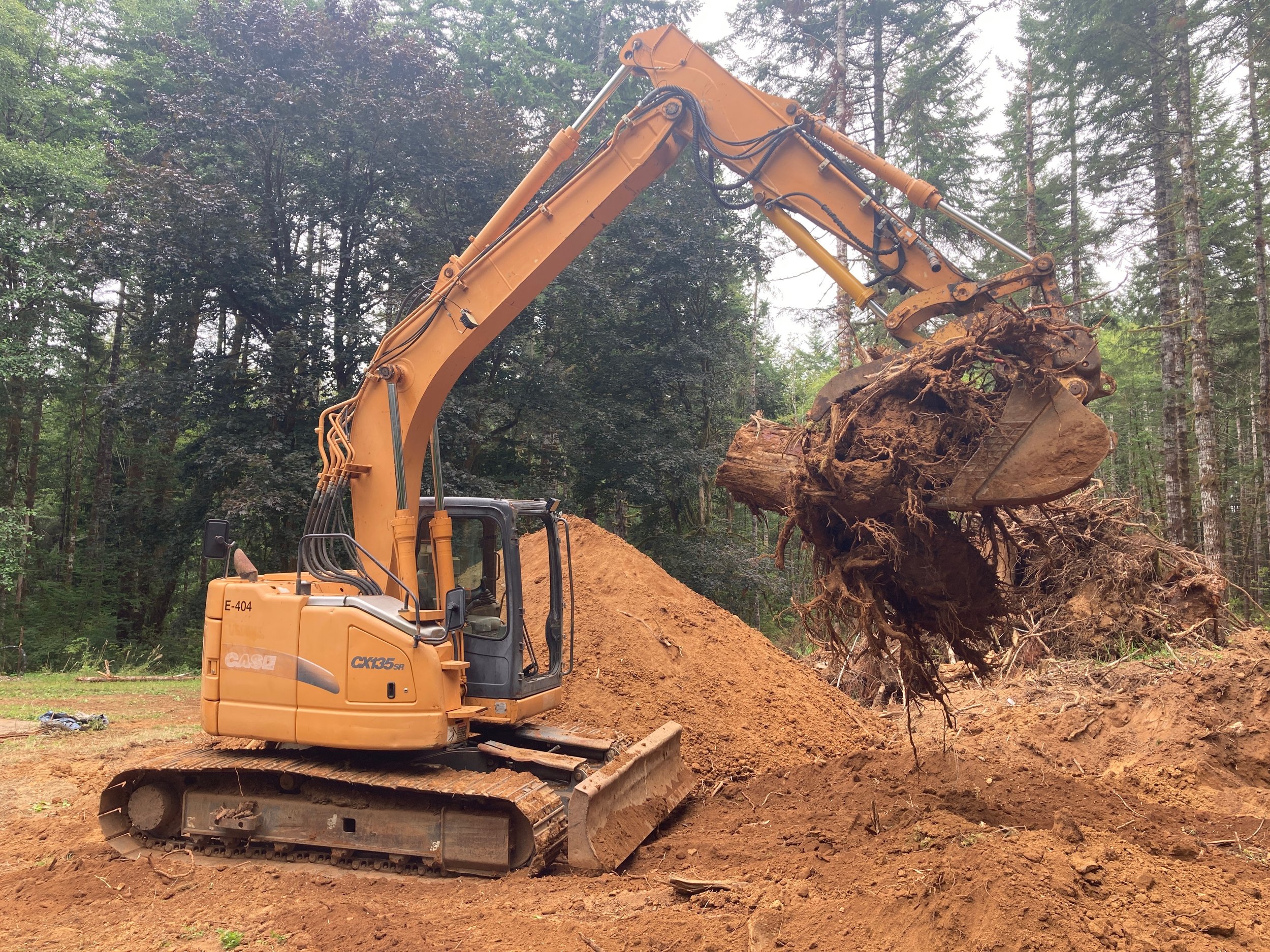
Torn out rootball from after a selective cut in the Pacific Northwest.
Operating an excavator with no protective glass is not a typical recreation. Nor is it a necessary one. However, when your uncle asks for your help in the removal of stumps, how could you refuse?
A clearcut in logging means no discrimination on which trees to take. In Washington State, a road can abruptly transition from beneath the deep shade of tall evergreens to an exposed wasteland of tree stumps and dirt mounds. These cuts greatly contrast my uncle’s decision to selectively log his land. He removed some profitable timber while preserving most of the larger trees and all of those with historical and sentimental value. His example stands out from most selective logging processes because it sustained the health of the forest. Most loggers remove only the most healthiest and most profitable trees, and they damage the forest’s diversity in the process.
Seeking solace in nature and finding smoke instead
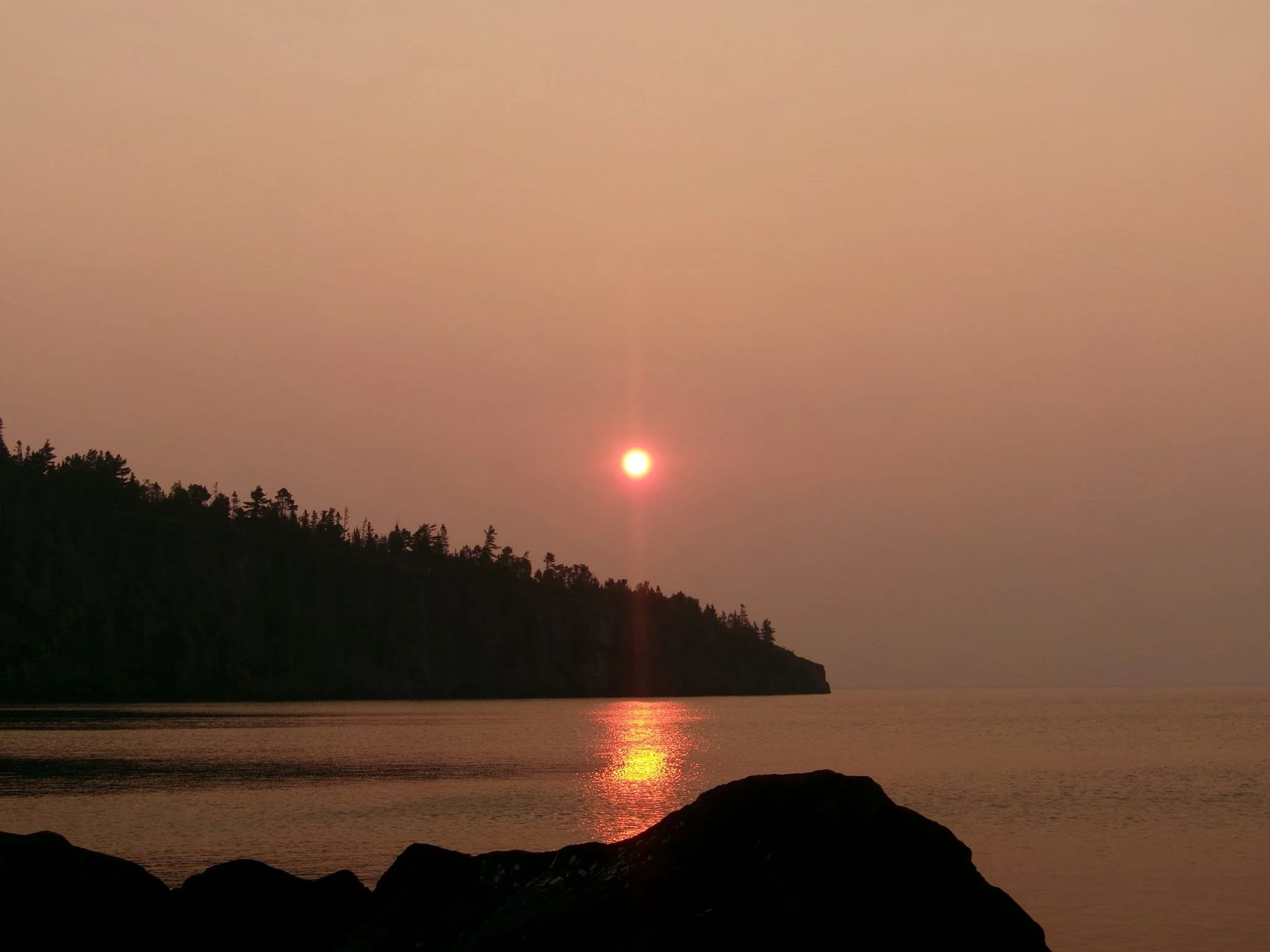
A smoky sunrise on Lake Superior
Last summer, I completed a backpacking trip in Northern Minnesota on the Superior Hiking Trail. The views were stunning, and this became the smoggy highlight of my summer, but the experience was tainted by poor air quality. Canadian wildfires more than 1000 miles away blew smoke south to us. I picked up a bothersome cough which persisted for two months. Despite rain, mud, and two sprained ankles, our group of 16 completed the hike, covering over 50 miles of trail. This experience taught me how to persevere and maintain positivity through challenging times. This also was the first time climate change had directly impacted me. Living in the Midwest, prior to this experience, I had been mostly sheltered from the majority of the effects of climate change. To further pursue my interest, I have undertaken a research project on indoor and outdoor air quality to measure the content of the air I breathe and to better understand factors contributing to poor air quality.
California’s Ever Burning Forests.
A Commentary on: https://www.nytimes.com/2026/08/23/climate/wildfire-forest-loss-california-southwest.html
In the Sierra Nevada, scientists are noting a stark shift: burned conifer forests that once regenerated within a decade or two are instead turning permanently into shrubland. Ecologist Winslow Hansen calls it a shift from one ecosystem to a fundamentally different one, and projections suggest up to 40% of Western conifer forests could convert to shrubland by 2100. Fires now burn hotter and faster than pine seeds can survive, soil microbiology degrades, and a drier atmosphere pulls moisture from whatever tries to grow back.
This isn't just about losing pretty trees. Forests anchor snowpack. Some Western states draw 75% of their water from snowmelt, and treeless slopes mean faster, earlier melt, worsening shortages that are already acute. Older trees also store far more carbon than the shrubs replacing them, so the loss compounds the very warming that caused it. It's a feedback loop driving climate change. Heat kills forests, and dead forests can't buffer heat.
What strikes me most is the researchers' own arc. Several grew up watching forests as kids, expecting the "revitalization" they'd always known, only to spend their careers documenting its failure. That's a telling marker of how far the baseline has already moved. Efforts now underway, such as planting heat-tolerant seedlings from lower elevations into burn scars. feel less like restoration and more like triage. Thus, "natural" recovery may no longer be something these landscapes can be counted on to do.
Even the scientists concede real uncertainty about which forests will survive. The Sierra's brown, shrub-covered slopes aren't a temporary wound. They may be the new landscape.